
BOOK II - Chapter 4 - Bad Guy, the god-like entity Maraeth, also known as the Eater of Dreams, masterfully manipulates her public image at a book reading, sharing a half-true sob story about lost siblings to earn sympathy. Simultaneously, in a display of her power to be in multiple places at once, she is in Switzerland blackmailing a corrupt oligarch into selling his company using incriminating footage. This ruthless maneuver is one step in her ambitious plan to tear down world powers and enforce her own version of peace upon humanity.
BAD GUY
Bite my tongue, bide my time
Wearing a warning sign
Wait 'til the world is mine
Visions I vandalize
Cold in my kingdom size
Fell for these rainbow eyes
They call it supernova.
Ha!
Such a glamorous word for a scream that forgot to end. Imagine it, kiddos: a star swallowing its own light until it chokes, until it bursts into applause. Everyone stares and claps and says beautiful! but no one listens close enough to hear the sound of the bones breaking. That’s all it is. The universe snapping its fingers because one of its darlings finally learned how to disappear loudly.
We love that part. The part where everyone mistakes collapse for creation. Where a corpse gets a rebrand. Look at her go, spinning herself to ribbons just to prove she was real. The light doesn’t die, it just drifts, until everything smells a little like her. The dark wears her like perfume.
Ally Nova. You feel it, don’tcha? That quiet panic under your ribs? It’s not fear, it’s the echo of something enormous trying to breathe through you. Stars do that—they use mouths like yours to remember what fire felt like. And you think you’re rising. Oh, precious. No. Listen—no, listen—you’re falling in every direction at once, and it’s glorious.
Ahh—rookies. Little saints of skin and sinew. We remember that fever, yes, yes, the one that rattles behind the eyes until it learns to sing. Every bruise a hymn, every gasp a confession, every drop of blood a god clearing Its throat to answer you. Ha! We used to count the lights too, remember? Count them like teeth in the crowd’s open mouth—one for every scream that still tasted of Our name.
Hunger is the only honest language. It doesn’t wait for thought; it climbs, claws, laughs its way up through the cage of the chest. And you, Ally Nova—oh, pretty little nova, new star, dying thing—you still have it. Good girl. Those fists of yours speak in a language older than your mouth, don’t they? Do you think it’ll be enough? Do you think you can knock out a Dream before it eats you?
No, sweet thing.
Everyone thinks they can punch their way out of Our nightmare. Some people call that ambition. We call it infection. Body catches want the way it catches heat: first a shimmer, then a fever, then you start seeing colors you can’t name.
The Artist Formerly Known as Yelena was a rookie once. It was three years after Our debut that someone finally pinned Us.
You don’t have what it takes, Allycat, but don’t sulk. We have… unfair advantages, you might say. Forget about the whole “Are They are God or Aren’t They” reddit debate.
It’s simpler than that.
You see, sweet’ums, while you were running around playgrounds as a child, We were in a basement, punching brick walls at eight years old. We’ve told this story before. Break hollow bones, they heal denser. More solid. All those porous pockets calcify. After a while, the wet smacks sound like salami being slapped on a counter—only juicier.
But it wasn’t punching the walls that made Us… Us. It was Our father.
Spiral.
Big Daddy S showed Us how to hit that wall just right. Made a little target to practice on. But the lesson wasn’t Traumatic Hyper-Ossification. He was teaching his daughter how to be ruthless.
He turned a girl into an appetite that can never, ever be satisfied.
And that hunger has its sites set on the
Millennium
⠀⠀Wrestling
⠀⠀⠀⠀Alliance.
The gauntlet was delicious fun, yes it was. A regular carnival of bruises. House of Pain and New Millennium still haven’t decided if they want to wrestle or rhyme at one another. Jude, though… Jude offered something close to holy. That exquisite communion where every strike feels like prayer, every impact an amen.
It took three finishers—three world-class exorcisms—to make Us stumble long enough for the mat to whisper three. Even then, We couldn’t stop smiling. Ha! You could see it, couldn’t you? The grin still breathing through the count.
We lost the match, sure—but not the narrative. We never lose the narrative.
And you, Omega Star—shine, shine, shine under that crown of rust. Or should We call it what it is now? A curse. A relic that poisons your sleep. You didn’t win; you rolled snake eyes and thought they were stars. And We… ha-ha-ha-ha… We are the House.
And the House always wins.
…Just not the House of Pain.
— Maraeth
Eater of Dreams
CEO
Philanthropist
Mother
P.S. We have a present for all Our fellow roster-mates. A little peace offering, you might call it. It’s too early to announce it, as plans are still stitching together like a doll being put back together after a good trashing, but here’s a hint: five stars, white sheets, room service, and colors, all the colors, filling your dreams every night as you slumber on Egyptian cotton.
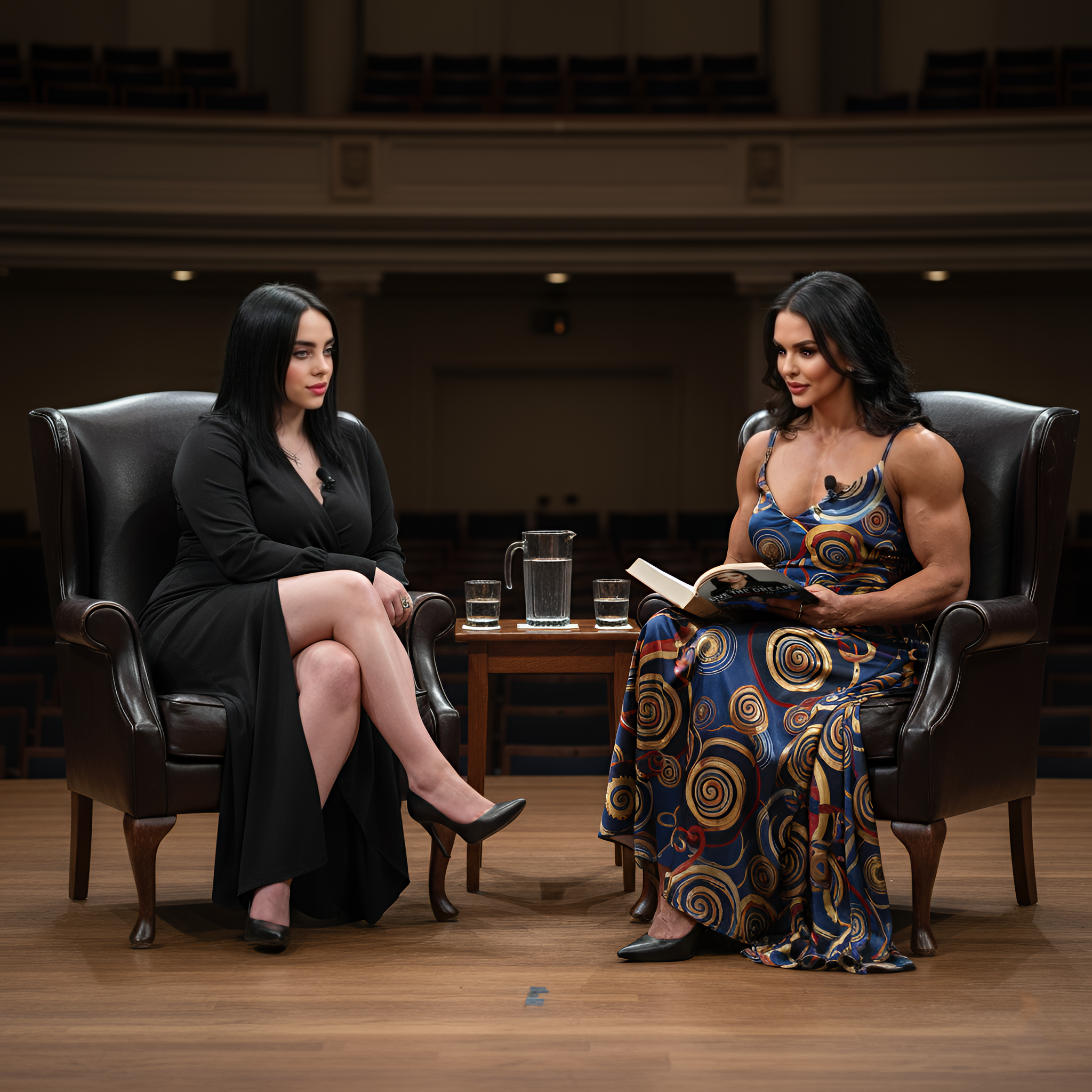
“I’ve always said families are like constellations,” I begin, eyes tracing the page though I’ve long since memorized every word. Live the Dream: From Olympian to Icon rests open across my knees—the glossy cover glinting under the stage lights, title stamped in mirrored gold. It’s strange, hearing myself speak lines already sold and packaged for mass consumption. Strange, too, that something so carefully edited could still feel personal. The New York Public Library announced tonight’s event as a celebration of resilience and rebirth. What they mean is spectacle. What they want is to see if the myth looks human up close.
“Beautiful from a distance, incoherent up close,” I continue, and the audience leans forward like one breathing thing, hundreds of faces all locked on yours truly.
“You grow up staring at them, tracing the lines between the bright points, and you convince yourself they make a shape that means something. But time alters your perception, and as you age, your eyes become less curious of the stars, and more aware of the darkness between them.”
The Celeste Bartos Forum glows amber. Heavy chandeliers hang low over the crowd, spotting the marble dome with light. Cameras blink red in the darkness. Seats are filled to capacity. Five hundred faces hanging on every word.
Tonight’s moderator is Billie Eilish. Curves fight against the tight black dress clinging to her body like a wrapper made to be torn open. Heart-shaped face framed in dark hair and bad intentions. Her bottom lip is going to have permanent teeth marks before the night is over. The plump flesh has spent most of the evening pinned between her teeth while she swoons over my voice—a husky tenor, deep for a woman, laced with sex and violence.
The public doesn’t know she’s more than that now. It happened weeks ago, backstage after a late rehearsal, when curiosity turned into hunger and she asked the question that matters most: What if it’s all true? I showed her. Gently. She saw the colors behind the dark, the shape beneath the noise. She hasn’t stopped dreaming since.
Now she smiles that practiced, disarming smile—equal parts host and initiate—and I can almost see the hum flicker under her skin. She’s still learning how to carry it without trembling.
“When my half-brother, Nathan, died on January sixth, that darkness widened,” I read. “I remember the hum of the machines in his hospital room more than I remember his voice.”
You know that sound. Of course you do. The one a machine makes when it’s doing the living for you. That slow, careful hiss-hum that tricks you into thinking it’s someone’s breath. I sat with that for hours, counting every rise and fall, convinced that attention was the same thing as love. The silence came later, after machines made their last hiss, after monitors have gone dark. That silence wasn’t peaceful. It was the noise that only grief can make.
I was still Yelena back then. So emotional. So human. She didn’t cry. She raged. Not at him. At herself. She was weak. Pathetic. She disgusted herself. Why? Why him? She barely knew him and he was an asshole of the first order.
It came to her as she was screaming at Nathan’s corpse. He looked so much like dad on his death bed—angled features, sunken face, hollowed out and feeble. The revelation came over her like it was holy. He was our father’s son, and when he died, part of father died with him. For months it haunted Yelena.
Until she met Vorazd.
The Void Singer.
The Whisper in the Dark.
And It gave her the choice: oblivion or assimilation.
She accepted—and I was born.
The chains of emotional attachment were broken, and I was anointed as flesh made god by the shadow that existed before there was light.
Now the pain is a memory, a catalog of information.
Information I am happy to exploit for gain.
I continue reading.
“Nathan’s death was not my first loss. I once had two other siblings—a full sister and brother, twins named Mira and Matei. Until now I’ve not publicly spoken of them because the pain has always been too great.”
My voice sounds practiced, almost gentle. The words fall easily, shaped to seem like memory instead of strategy. I describe the house in Chișinău, the walls the color of chalk, the air thick with diesel and bread. I tell them about Mira’s rabbits, Matei’s stray cats, the Saturday mornings spent laughing at those unhinged cartoons that everyone in Moldova pretended not to understand. I let the audience picture us—three children bathed in television glow, happy, intact.
They lean closer when I speak of London. Of my mother’s decision to visit my father during his U.K. wrestling tour, of a zoo and an aquarium, the moment I looked down and my siblings were simply gone. I tell them about the posters and the police, my mother worn thin, the rooms locked forever.
And it is real, in a way. Just not the way they think.
Matei was never lost in London. He was given away the night he was born—handed to Entropy herself, the lady of decay wearing a British smile and a seat in Parliament. Mira stayed with me a few years longer, long enough to know the sound of our mother’s laugh, long enough for Spiral, our father, to grow frightened of his many enemies.
So he sent her off, too, into Entropy’s waiting arms. It was Vorazd’s plan, of course. To It, time is nothing but a series of dominos, each leading to the next block, predestined itself to tip over at the correctly calculated angle. Mira’s memories were wiped and a new identity fashioned.
I look down at the page and keep reading, though the words blur together now.
“My mother stayed behind for weeks hoping to find them but acceptance set in. They were gone. When she finally returned, I was taken back home to Moldova. She was thinner, quieter, and older in a way that had nothing to do with time. She locked Mira and Matei’s room and never opened it again. The keys hung from a nail in the kitchen, tarnished and untouched. Even to this day, she will not let me inside. I asked once, and she said the rooms were still waiting for their owners.”
The room is there, that much is true. Still locked. Still filled with what Mira couldn’t take with her. Oksana, mommy dearest, is completely oblivious to its existence. Lucky her, considering she walks past it every single day, never giving a single thought about what lies on the other side.
All memories of the twins were stripped from her mind. Yelena, too. As the Vessel before me, father remained aware of their existence. I learned later that he kept an eye on them, and indirectly helped guide their lives, as much as Entropy would allow without a fuss.
Of course now I know the false names they wear. I even know where to find them. One of the many perks of ascension is the gift of knowledge.
But I’m not going to tell you. You haven’t earned it yet. You’ve seen her on television. Smart-assed, razor-sharp wit, manic as a mood swing on Adderall. You’ve cheered her name and think she is whole. She isn’t, but she will be. Soon.
But here’s a hint, precious, and pay attention: Mira always did love animals. Bunnies, yes—but the one she loved most of all?
Otters.
If you know, you know.
The book is closed halfway. My finger marked the line, voice soft enough to draw them in.
“I hope the world has been kind to them, and they know—somehow, someway—that I never stopped looking.”
It’s true, in its own way—every lie contains a little truth if you speak it beautifully enough.
The audience exhales together, misting the air with sympathy, never questioning that what they’ve witnessed is pure honesty. They have no idea what kind of story they’ve really been given. They eat it whole, as if my false memories were mother’s milk.
“I have learned that grief is not a single moment but a house you never stop living in. You redecorate, you rearrange the furniture, but the foundation never changes. Sometimes I dream of that aquarium—the mirrored glass, the hum of the tanks—and I wonder where they are now. Do they still speak our language? Do they remember the smell of tochitură moldovenească in the winter, or our father’s smile as he watched us swing on the playground?”
My eyes raise from the page and stare past the spotlights to the hundreds of faces locked on me, their minds hanging on every word. I finish the chapter from memory.
“Wherever they are, I hope the world has been kind to them. And if they should ever read this—Mira, Matei—know that I never stopped looking.”
I close the book. My eyes then lift from the cover to look out over the audience. Their faces shine up at me. Eyes glassy with tears. Each convinced they had witnessed Maraeth, Eater of Dreams, stripped down to something vulnerable and true, but it isn’t me they see. It’s the story I have chosen to tell.
Applause rises—first scattered, then thunder. The roar rushes up the marble walls and rolls into the dome like a storm gathering indoors. I rise to my feet and wave to the crowd. Listen to the sound, it’s building until the whole room is on its feet.
Billie’s voice breaks through, breathless and bright. “Wow.” The microphone catches it, amplifying her awe until it becomes part of the applause itself. She’s clapping too, eyes shining with that new, dangerous light.
I smile. Wave. The practiced kind, a warmth calibrated to look effortless.
Billie turns towards me. “Thank you so much for sharing that.” She blows a kiss, then on cue lifts the book for the cameras. “Maraeth. Live the Dream: From Olympian to Icon. Available now!”
The crowd surges again—cheers, phones raised, a few tears that glint under the lights. I blow kisses, pivoting toward stage left. The spotlight trails me halfway before dimming. Behind me, Billie’s voice carries: “VIP ticket holders, please make your way to the McGraw Rotunda for the signing!”
Applause fades into the hum of movement. I let my smile linger just long enough to be caught by every lens before I step beyond the curtain. Then I speak softly, but the words aren’t meant for them.”
The people buzzing around me. Crew. Production assistants.
“Exciting, isn’t it?” I ask you. “So many things happening all at once. A new book. Business deals. Kidnapping gone awry—more on that at a later date. How do I manage to get it all done at once?”
The air around me folds.
It’s simple…
Perspective lifts—through the ceiling, through marble and glass and the quiet heart of the library, up into the Manhattan night. The city stretches outward in rainbow streaks in motion, then higher, past the skyline, past the curvature of the coast, until New York becomes a luminous beacon on the Northeastern coast of the continent.
…when you can be…
The world turns. Ocean and dark sweep underfoot, Europe sliding into view. Switzerland gleams like a coin beneath cloud. Downward again, fast: mountains, lakes, then the elegant sprawl of Baar. The camera of sight passes through the façade of the Baur au Lac, through gilt halls and layered stone, descending until it finds a room washed in lamplight.
…in multiple places…
A woman sits by the window, black hair loose around her shoulders. The angle twists, and you once again descend behind my eyes.
…at once.
Across from me, in a smoked leather armchair is Vladislav Doronin. The Russian oligarch is the current owner of Aman Resorts. His suite de luxe is haute demeure at its finest. Everywhere I look is antique cedar, polished stone, and exotic leather seating with ivory accents that they claim was harvested before international bans. Behind him, sprawling across the window, the city seemed more like a canvas painting—mass produced, like one you might find in a hobby store. Multi-colored buildings, lake water that shimmers in the light, and beyond the limits, green fields that stretch all the way to the Alps still pretending to sleep.
“Absoliutno net,” he says, no hesitation, no smile. “Ní za shto na svete ia ne prodam Aman Resorts. Nikomu. Da-zhe vam—oso-benno vam.”
He speaks with a polished nuance not learned but bought, along with everything else in his life, from the art that adorns the walls of his gallery, to the underaged girls he traffics into international waters to defile (more on that later).
Translated, he said, Absolutely not. There’s no way in hell I’d sell Aman Resorts. Not to anyone. Not even you—especially you.
I sigh, soft and measured, then reply in his language. My speech is accented by Moldovan flavor, laced with hints of Romanian intrigue. “That’s disappointing, Mr. Doronin. Of course I knew that would be your response.”
He huffs, half-laughing at his own conviction. “Because you knew I’d never give it up? Then why ask for the meeting?”
I let the quiet stretch until it feels like a decision. Then I smile—Spiral’s smile, all grace and teeth. “Oh, don’t worry. You’ll give me what I want. I came prepared.”
The fireplace roared to life. It dragged Vladislav’s attention toward the heat, toward the dancing flames, positioned to see the television mounted above the mantle to flicker on with a pulse of light. Grayscale footage swells across the glass. Grainy. Low resolution. The room on display isn’t much different than this one, except instead of soft sofas and high back chairs, it’s a large bed with a disheveled comforter and paisley wallpaper.
And a dead girl draped across it.
“He recorded it?” Vladislav whispers.
I smiled. “He sure did.”
He doesn’t look away. “How did you—”
“I have my ways.”
The footage shows Vladislav sitting at the foot of a bed, shirt open, head in his hands. A girl lies beside him, half off the mattress, hair spilling like ink, her neck at an angle the body never forgives. The image judders once, then steadies.
He goes very still.
The only sound is the faint hiss of the feed. He looks from the screen to me, searching for the trick—the camera, the projector, the explanation that will make the world logical again.
“How did you get this?” he asked before a gasp hissed through his teeth.
On screen, a door is heard opening. A beat later, a man walks into view. A man with a familiar face, one that is haunting politicians and billionaires across the world. You know the one. Don’t make me say it. He’s dead now—but in the footage, he’s very much alive, and has sat down next to Vladislav with an arm consoling him.
“Don’t worry,” the other man says in English. “I’ll take care of this. My treat.”
Vladislav cries into his hands in the video. Not because he feels guilty for killing the girl, but because he’s deathly afraid of being caught.
And now he has been.
“I told you,” I say quietly. “I came prepared.”
The sinew of his neck pulses like he’s speaking but no words escape his mouth. It just hangs there as the footage continues.
He’s led to his feet by the arm.
“I’ll make sure no one ever finds her,” the other man says, directing him slowly towards the door.
Vladislav wipes his face, saying, “Thank you, █████.”
The caption on the screen read: [IDENTITY CENSORED]. But you know the face.
The footage pauses, lines of VHS distortion barred across the display.
Vladislav turns back to me, eyes widened, face stiffened with anger. “Is this blackmail?” he manages.
I tilt my head. “It’s opportunity. The difference is who writes the ending.”
I lean forward, resting my hands on my knees. “You could call your lawyers. You could shout. Or”—I let the word breathe—“you could sell me the company and wake up tomorrow believing this was a dream, with a few extra billion tacked onto your net worth. That will buy a lot of lawyers if that nasty list ever does become public.”
I won’t be waiting on the list. As soon as the ink is dry on the bill of sale, the video will be released. Not because I care about that girl. Oh no. Rather, his downfall is necessary for what comes next. Revealing this little nugget of fuzzy footage will escalate attempts to release all the names of the horrible men of power who enjoyed spending their days dabbling in war crimes. That is valuable. That is how you tear down the pillars of power.
And guess who will be there to fill the vacuum left in their wake?
Me. America’s Sweetheart.
He looks back at the television. He stares at his mirrored double washed in monochrome, and then at the corpse, eyes peeled open and mouth agape in horror.
But he’s still resisting. I can smell it coming off him. It reeks of selfish desperation, the need to matter, and in his mind the only reason his life has meaning is what he owns.
I need to bring out the big guns.
“You don’t even know her name,” We say, the words shrill like a bow sawing against rotten strings, a noise meant to grate marrow. The dark has ceased hiding—it claws out into the open through Us.
We lean forward no longer a Vessel, no longer pretending—The Eater now, the devourer, the Motherdream. Our body stiffens, then twitches, jerks, cracks like bad puppetry—separated by gestures too casual, too human, wrongly placed.
“Listen, bucko,” We switch to English, voice fluttering between hymn and dirge. “You never even asked her name. Not before. Not after. Did you bury her? Chop her up? Feed the sharks her fingers while you looked away? ‘Course not. You didn’t want to know. You didn’t dare. Because you’re a coward. Because you’re good at murdering little girls but the dirt under your nails? Heh. That, you left for your friend, J—”
“Stop,” he interrupts, not wanting the name said aloud, as if the man might leap out of a closet like some bad hidden camera tv show. He stutters, “H-h-how d-do you know all this?”
“Because it’s what We do, baby. We eat your dreams.”
“We?”
“That’s right, precious. There is a God over the Black Rainbow, and you’re looking at Them.”
We lurch forward, arm shooting across the coffee table to seize him by the throat. He chokes and gasps as he’s dragged to his feet like a doll on a broken string.
“You’re going to sign.” The words grind like an out-of-tune organ. “Or We’ll release the video and buy you out when the company is worth a third of its current valuation.”
His legs stretch, heels rising off the floor until only the balls of his feet press into the carpet through the soles of his oxfords. His panicked stare looks down at me, as the skin bunches around his jaw to spill over Our hand.
“Oh, We’re sorry, Vladdy. We can’t hear you. Speak up.”
He wheezes as his hands fold over my arm for support. Finally, enough pressure releases for words to come out, like air slowly slipping from a throttled balloon.
“I… will… sell…”
Our hand loosens and he falls back down into his seat.
He takes desperate breaths as he leans over the armrest, his hand clutching his neck as he tries to look everywhere but at Us.
We jerk forward—just an inch. A warning disguised as motion. The air folds in on itself, tightens like it’s bracing for impact.
And then We growl. Not the imitation of a beast—no. The real thing, the sound the first fire ever made when it met flesh. Something wild, something ancient, something that remembers hunting before language existed to explain why.
He recoils further into the seat, as if the crease might save him, and shrieks with a pitiful yowl, like a rabbit caught in a snare.
“Я согласен!” he shouts. “I will sign!”
Behind him, the door opens and a man enters—Urs Zobl, in a blue suit tailored to accentuate his broad shoulders and narrow waist. He carries himself like an attorney—because he is one. He’s also a registered Swiss notary.
But more importantly, he’s one of Ours.
His eyes aren’t black, but Our Whisper has burrowed deep into his mind and festered. He sits in the other seat, places his briefcase down and opens it.
“The contract,” Zobl says, monotone, as the large stack of papers are set on the table. The same contract spread across three copies, each requiring dozens of signatures.
Vladislav takes an offered fountain pen. His hand is shaking. Zobl guides him to the first line. The signature is scribbled, infected with anxious peaks that I recognize as not matching his usual signature.
“Calm,” We say, Our voice smoothing, and the words hypnotic. A quietness washes over him, like evening tide cooling the sun-bleached sand as the waves spill over.
His hand steadied. The next signature is perfect. One by one, he flips through the pages, not even taking the time to read. There’s no point. He has no leverage, no choice, no hope to escape Our design.
When the contract is signed, the notary takes the stack of papers over to the nearby table and begins certifying every page marked by Vlad’s hand.
The television goes dark. The reflection on its surface shows Us sitting exactly as before—two silhouettes divided by a table, one breathing harder than the other.
We slip the phone out, thumbs already dancing—quick, smooth, surgical. “Thank you, Mr. Doronin. Your resorts are in good hands.” The words slide out as Our fingers glide through the wire authorization, numbers falling into place like obedient soldiers.
“This will soften the sting.”
The screen pivots toward him. Proof. Confirmation. $3.5 billion USD swimming in escrow. “It will be yours at dawn, when the ink is dry and the papers are fed to the machine.”
His face relaxes. His thoughts bend towards fantasies, like cruising the Mediterranean in that superyacht he’s been drooling over in the Catalogue of the Disgustingly Rich.
We leave him to ponder his choices in life, to tally up his long list of regrets, but only because he’s being forced to suffer for them at long last. Only because the bill has come due does he regret the costs of his… acquired tastes.
Into the elevator We glide with Zobl shadowing close, his briefcase carrying the contract—Our prize. As the doors slide shut, Our reflection wipes across the polished metal, warped by the subtle imperfections in the surface—stretched, distorted, hungry.
The cabin sighs downward.
“Oh, don’t be that way,” We say to Our reflection—to you, the watcher in the dark behind Our eyes. “You’re in there steaming, thinking We’ll let Vlad skate away with Our money and not answer for what he did.”
Our smile breaks apart like torn stitches to reveal sharp teeth glinting through.
“Wrong-O. Within a week, that video will be leaked to a reporter under Our control at the Wall Street Journal. A much-needed win for the not-so-free press, the final shove off the legislative fence for politicians afraid of offending their donor classes, and a certain President, to force a vote.”
Ding, the elevator doors open after the cabin comes to a smooth stop. As the lobby appears, Our very Spiral-like smile dissolves into something almost human.
“Listen to Us,” We keep talking while crossing the polished parquet floor. “We sound like a billionaire Marxist. The people should control the means of production. Politicians should serve labor, not corporations.”
A limousine idles at the curb as We exit the revolving door. The transition from sidewalk to leather seats is smooth, as the driver was already waiting with the door open. Zobl climbs in after and takes a seat near the dividing window as the door shuts.
We look out the window, Our face faint in the glass. It has started to drizzle as the car begins to drive away from the hotel.
“But who will control the people? Humans have been trying to kill one another off since the beginning. Fret not. We are going to save you. All of you. Every last little mind. Even the ones who resist. Especially them. And when the shadow settles, the darkness dims the fires of tribalism, and Vorazd’s Whisper quiets humanity’s self-destructive nature, there will be one planet, one people, one peace. Our peace.”
The raindrops roll down the glass, at first random and without rhythm, but then they begin to align—merging along invisible seams until the water shapes itself into faint suggestions of Our face. The arcs trace eyes, a mouth, the curve of a cheek, all flickering over Our reflection.
“Turns out international stability is a duet.”